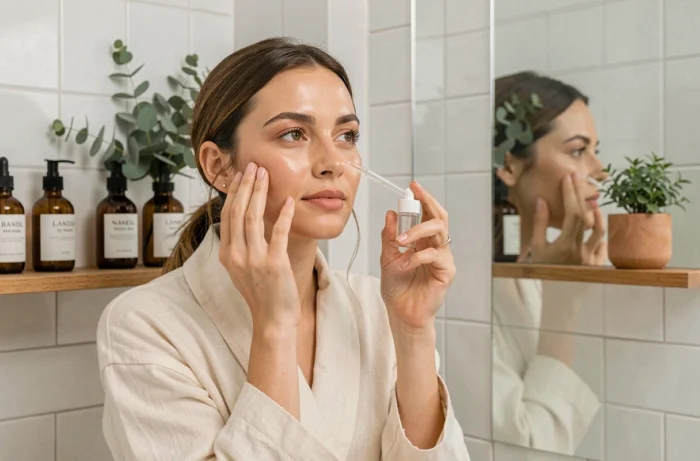
Choosing natural care for the face, body, or hair requires knowing where to find the right information. Between specialized blogs, ingredient sheets, and formulation guides, online resources are multiplying, but their reliability varies greatly. Understanding which pages deserve your attention can save time and avoid routine mistakes.
“Natural” Claims on Cosmetics: What European Regulation Changes
Have you ever noticed mentions like “green care,” “eco-responsible formula,” or “environmentally friendly beauty” on a bottle? These vague formulations will disappear from labels. The European directive (EU) 2024/825, known as Empowering Consumers for the Green Transition, prohibits, starting September 27, 2026, any generic environmental claim that is not based on proven performance, referenced by an official label such as the European Ecolabel or ISO 14024 certification.
For consumers, the consequence is direct: web pages that present a product as “natural” without detailing the composition or mentioning a recognized certification will lose credibility. Brands will have to justify every term used.
This regulatory evolution also affects “in-house” logos. A pictogram invented by a brand, featuring a green leaf and a reassuring slogan, will no longer suffice. Only labels certified by a third-party organization will be allowed on packaging and online sales pages. When you consult a product sheet, check for the presence of a label like COSMOS, Ecocert, or Slow Cosmétique rather than a simple decorative logo.

To easily identify reliable resources on this topic, browsing all the pages of Beauté Nature offers a structured starting point, with content categorized by care theme.
Vegetable Oils and Hydrosols: Identifying Pages that Really Detail Actives
A vegetable oil remains the basis of most natural beauty routines. The problem is that many online pages simply list names (jojoba, argan, castor) without explaining what differentiates them dermatologically.
A truly useful page specifies three concrete elements:
- The fatty acid profile of the oil (oleic, linoleic, palmitic), which determines whether it is suitable for oily or dry skin
- The extraction method (cold pressing, CO2 extraction), as it influences the concentration of actives and shelf life
- Possible contraindications, such as the comedogenicity of certain oils on acne-prone skin
For hydrosols (rose, chamomile, lavender floral water), the same principle applies. A cosmetic-grade hydrosol must mention its concentration of active ingredients and its pH. Technical sheets from specialized suppliers are often more precise than generalist blog articles.
Why Cross-Reference Multiple Sources on the Same Ingredient
One article is not enough to choose an oil or hydrosol suitable for your skin. The most reliable pages cite verifiable references. Comparing a supplier sheet, a specialized blog article, and a formulation guide allows you to spot inconsistencies and refine your choice.
Natural Beauty Routine for the Face: Building a Coherent Care
Many pages offer routines in five, seven, or ten steps. This number of steps is not a guarantee of quality. An effective face routine relies on three actions: cleanse, hydrate, protect. Everything else is optional and depends on your skin type.
Cleansing, for example, does not necessarily require a foaming product. An oily substance (vegetable oil or cleansing balm) dissolves sebum and impurities without stripping the hydrolipidic film. This action, called “double cleansing” when followed by a gentle water-based cleanser, is particularly suitable for dry or sensitive skin.
Hydration then involves applying a hydrosol to damp skin, followed by a vegetable oil or a cream formulated with natural actives. The hydrosol prepares the skin to absorb oily substances, which few pages explain clearly.
Natural Hair Care: Pages to Consult as a Priority
Hair responds to a different logic than facial skin. The most relevant pages clearly distinguish needs based on hair porosity (low, medium, high) rather than a generic hair type (dry, oily, normal).
A highly porous hair absorbs care quickly but also loses it rapidly. It needs thick vegetable butters (shea, mango) to seal in moisture. In contrast, low porosity hair prefers light oils and treatments applied to warm hair to open the cuticles. Pages that explain this mechanism will save you months of unsuccessful trials.

Reading Cosmetic Labels: Concrete Guidelines to Filter Reliable Pages
The INCI list (International Nomenclature of Cosmetic Ingredients) appears on every cosmetic product sold in Europe. Ingredients are listed in descending order of concentration. A natural beauty page that never mentions the INCI list lacks a fundamental element.
Here’s what the best pages teach you to spot:
- The first five ingredients make up the majority of the product. If “aqua” and “alcohol” are at the top before any plant active, the product is mainly water and alcohol
- Latin names in the INCI list correspond to unprocessed plant-based ingredients. A chemical name in English refers to a processed or synthetic ingredient
- The mention of “fragrance” or “parfum” without specifics often hides synthetic compounds, even in a product labeled “natural”
With the upcoming enforcement of the anti-greenwashing directive, pages that teach you to analyze these lists will become even more valuable. Brands that cheat on their claims will be easier to identify for consumers trained to read a label.
Building a reliable natural beauty routine relies less on the number of products than on the quality of the sources consulted. Favor pages that detail mechanisms, cite verifiable compositions, and clearly distinguish certified labels from marketing logos. It is this careful reading that makes the difference between following a trend and adopting care practices truly suited to your skin and hair.