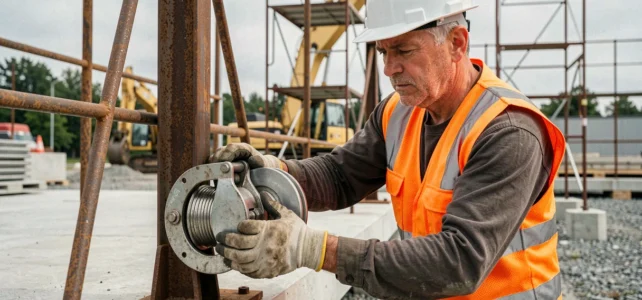
A winch with several tons of capacity, a new cable, suitable gloves: the equipment is ready. However, most accidents related to this tool do not occur due to a mechanical defect, but because the load or anchoring should never have been stressed. Knowing how to identify what should not be pulled is just as important as mastering the pulling technique itself.
Inappropriate loads for the winch: cases where the tool becomes dangerous
User guides detail the procedures for pulling or lifting a load. They rarely spend time on situations where the winch is the wrong tool, even with impeccable technique.
A tree whose natural tilt directs its fall towards an occupied area (road, building, power line) cannot be corrected with a cable of a few meters. The lateral pulling force exerted by the winch remains less than the resultant of the tree’s own weight combined with its displaced center of gravity. The cable may maintain tension, but it does not redirect a mass of several hundred kilos already committed to its trajectory.
A load whose actual weight is unknown poses a comparable problem. Before attaching the hook, one must estimate the mass to be pulled. If this estimate remains vague, the safety bolt of the lever will give way in case of overload, resulting in a sudden release of the cable. This intentional breakage mechanism protects the winch, not the operator positioned in line.
Another common case: stumps partially cut at ground level. When the main roots have already been severed, the stump can suddenly release under tension, without gradual resistance. The cable then violently slackens. To properly understand how to use a winch in these extreme situations, the basic rule remains to never pull a load whose behavior under tension is unpredictable.
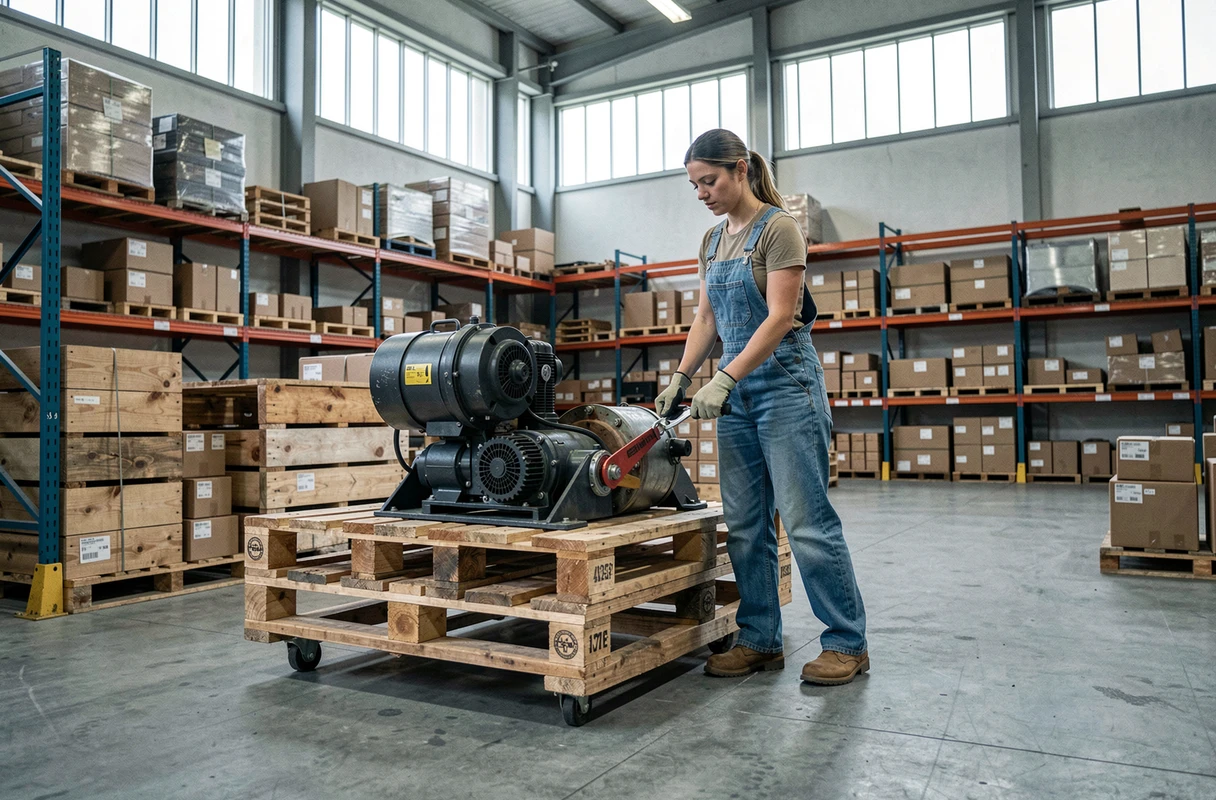
Anchoring and cable: checklist of defects to check before tensioning
The anchoring point constitutes half of the safety device. A dubious anchor turns a reliable tool into a projectile. The table below contrasts acceptable conditions with situations to reject.
| Element | Acceptable condition | Condition to reject |
|---|---|---|
| Anchor tree | Healthy trunk, wide diameter, deep rooting | Dead tree, hollow, leaning towards the load |
| Textile sling | Flat strap without cuts or fraying | Twisted strap, exposed to a sharp edge |
| Steel cable | Intact strands, no knots, visible lubrication | Broken strands, twisted or rusty cable |
| Safety hook | Functional closing latch | Blocked or missing latch |
| Artificial fixed point | Concrete block, sized anchor | Fence post, stake driven into the ground |
A galvanized steel cable with several broken strands loses its load capacity in a non-linear manner. In other words, a few broken strands reduce the resistance well beyond their proportion in the total section. Visually inspecting each meter of cable before rigging helps avoid this trap.
Sling and protection of the anchoring point
The sling placed around the anchor tree must be wide to distribute pressure on the bark. A chain or bare cable cuts into the wood and weakens the grip over time. On a living tree used as a fixed point, a flat strap protects both the anchor and the tree.
The hook on the load side should be attached as close to the center of gravity as possible. An off-center attachment point causes the load to rotate under tension, altering the pulling direction and stressing the cable in lateral flexion.
Progressive pulling: why jolts damage the winch
The self-tightening jaw mechanism of the winch operates by linear advancement of the cable. Each lever movement advances the cable by a few centimeters. A progressive pull preserves the jaws and stabilizes the load.
Conversely, abrupt or jerky lever movements create tension spikes in the cable. These jolts cause three effects:
- Premature wear of the jaws, which lose their self-tightening capacity on a damaged cable
- Unpredictable micro-movements of the load, which can tilt or pivot between two pulls
- Accelerated fatigue of the steel cable at the points of contact with the winch housing
The telescopic lever allows for effort modulation. The longer the lever arm, the greater the mechanical advantage for a moderate effort. Shortening the bar to go faster increases the necessary effort and encourages forcing, which produces exactly the jolts to avoid.
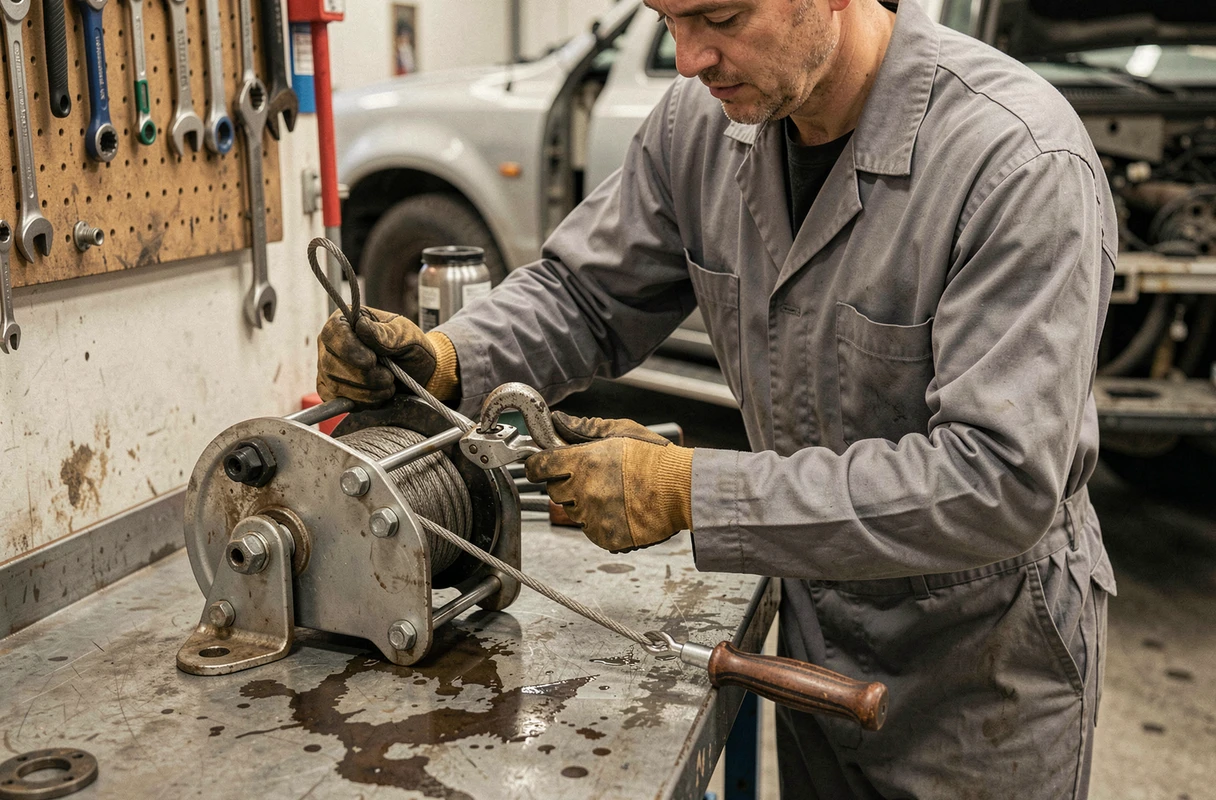
Safety zone and operator positioning during pulling
The danger perimeter corresponds to the axis of the taut cable, extended on each side. In the event of a break, the cable or hook is propelled along this axis. No one should be in line with the tensioned cable.
The operator operating the lever positions themselves to the side of the winch, never in line with the cable. People present on the site should remain at least the length of the deployed cable away.
- Wear thick handling gloves to handle the steel cable without risk of cuts from the strands
- Use protective eyewear against flying metal fragments
- Never step over a tensioned cable, even for a quick move
- Secure the load with an independent device (wedge, brace) before releasing the tension of the winch
Cable retraction after use
Unrigging is done lever by lever, in a holding position. Releasing the cable suddenly causes a dangerous whipping effect. The cable should be released in small lengths, keeping the winch attached to its anchoring point until fully withdrawn.
A properly used winch remains one of the safest pulling tools for heavy loads in difficult terrain. Its limit lies less in its mechanics than in the quality of what surrounds it: anchoring, cable, identified load, operator positioned out of line. When any of these elements is questionable, the right reflex is to not pull.