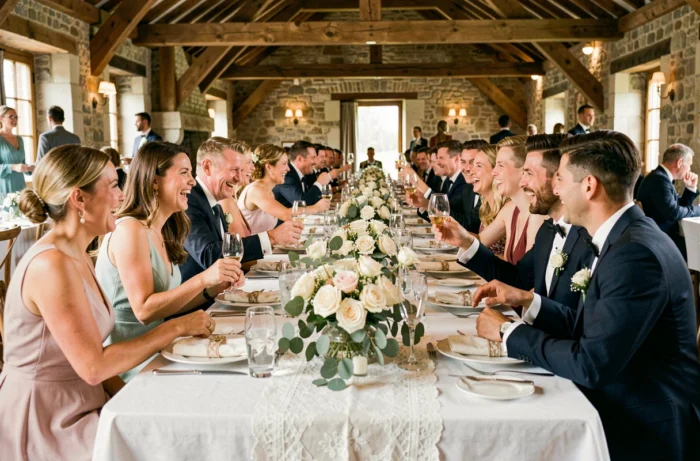
The timing of a wedding meal is crucial, with coordination between the caterer, the DJ, and the master of ceremonies down to the minute. A twenty-minute delay in serving the main course is enough to dampen the energy in the room and jeopardize the flow of planned evening activities. Hosting a wedding meal is not about stacking games between courses, but about orchestrating a flow where conviviality, sound, and service work together.
Operational coordination between caterer, entertainer, and couple’s representative
A successful wedding meal relies on a rarely discussed triangle of coordination. The caterer needs fixed schedules to send out the dishes. The entertainer or DJ must know these time slots to schedule their interventions without interrupting ongoing service. The couple’s representative (witness, wedding planner, or designated close friend) makes on-site decisions regarding unforeseen issues.
We recommend providing the complete schedule to the caterer at least two weeks before the big day, indicating the estimated duration of each activity. Surprises organized by the witnesses should also be communicated to the technical team to avoid a confetti toss during the flambé of a dessert.
The on-site representative must be empowered to make decisions regarding access and safety. Without this clearly identified person, every unforeseen issue falls back on the couple, ruining their evening. Several event professionals emphasize this point: a shared event plan among all service providers reduces friction far more than last-minute rehearsals. You can find wedding meal techniques on Info Mariage that detail this coordination logistics.
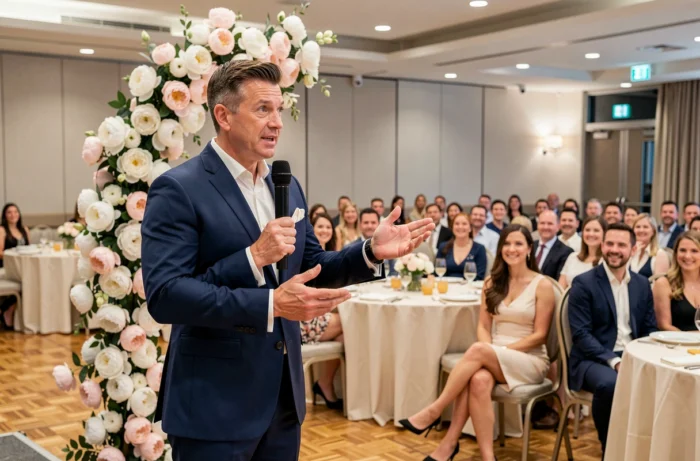
Managing sound volume during the wedding meal
The sound volume during a meal is the most underestimated lever of ambiance. If it’s too loud, it hinders table conversations and tires guests even before the dancing begins. If it’s too low, it creates a background noise where no one can hear each other either.
The music should remain a background during the meal, not a show. Entertainment professionals recommend a level significantly lower than normal conversation threshold during service phases. The DJ or entertainer raises the volume only during scheduled interventions (games, speeches, first dance).
Regulations also govern this issue. For events featuring amplified sounds at high levels, references mention thresholds of 102 dB(A) and 118 dB(C) measured over fifteen minutes, with possible obligations to monitor levels and provide hearing rest zones. End times for music can be set by municipal decree or by the venue’s own rules.
We observe that few couples check these constraints in advance. The result: a DJ cutting the sound at 11 PM when the party is in full swing, or a neighbor calling the police at midnight. Asking the venue owner about this before signing the contract avoids such situations.
Wedding meal activities: rhythm and dosage
Too frequent activities turn the meal into a series of interruptions. Reserved guests disengage, tables empty, and dishes cool down. The guiding principle is simple: each activity should preserve conversation times, not fill the gaps.
What wedding games work between courses
Games that can be played seated or in small groups are best suited for the meal format. They do not require anyone to leave their table and can be initiated in seconds.
- The quiz about the couple, distributed on paper to each table, works without an entertainer during service and creates conversation among guests who do not know each other.
- The dare game slipped under the plates (one instruction per place setting) provokes spontaneous interactions without a microphone or staging.
- The collaborative guestbook, where each table writes a memory or advice on a thematic card, occupies waiting times without monopolizing the attention of the entire room.
The photobooth, often set up in a corner of the venue, remains one of the most cost-effective activities in terms of participation. It operates continuously without a dedicated entertainer and generates tangible memories for guests.
When to place activities in the evening schedule
We recommend concentrating interactive activities between the starter and the main course, and then between the cheese and the dessert. The main course should be eaten without interruption. This is the moment when the caterer needs guests to be seated and attentive to their plates.
The first dance and speeches are ideally placed after dessert, when the meal is finished and the room’s energy can shift towards the celebration. Inserting a speech between two courses disrupts the service rhythm and extends the total meal duration.
Common mistakes that ruin the ambiance of a wedding meal
Entrusting the entertainment to a friend without technical training is a risky bet. Managing a microphone, starting a playlist at the right moment, reviving a game that falls flat: these skills are acquired. A professional entertainer or experienced DJ knows how to read the energy of a room and adapt their program in real-time.
Another classic mistake: planning too many activities kills the ambiance just as much as planning none. Three to four well-placed highlights are sufficient for a meal lasting several hours. Beyond that, guests become saturated and participation drops.
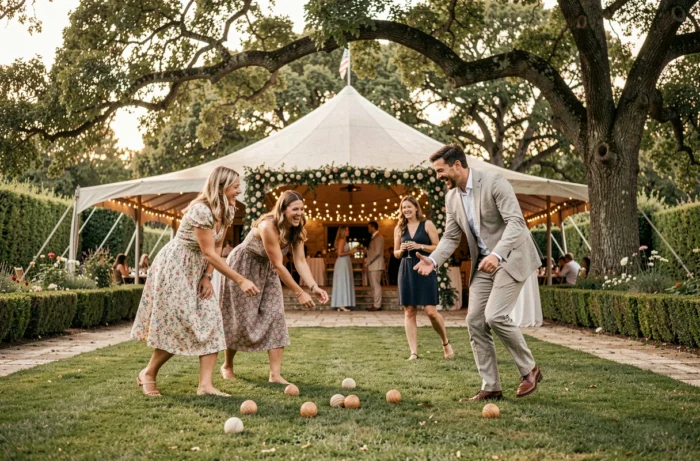
Failing to plan a weather contingency for outdoor activities (cocktail bar in the garden, outdoor games) remains a classic for spring and summer weddings. The most reliable solution is to choose activities that also work indoors, without heavy adaptation.
- Designate a single person responsible for coordinating sound and the order of interventions.
- Test the sound equipment on-site before guests arrive, not on the day itself at the last minute.
- Communicate the final seating plan to the entertainer so they can address the right people during the games.
A successful wedding meal relies on a solid technical framework and measured entertainment choices. The couple that invests time in coordinating between providers and carefully doses their activities achieves a smooth evening, where guests naturally move from the table to the dance floor without downtime or overload.