
The storage aisle of DIY stores is full of modular solutions, and plastic cabinets hold a special place there. Lightweight, moisture-resistant, and sold at a low price, they appeal for both the garage and the laundry room. However, choosing a suitable model depends on criteria that product sheets do not always highlight, particularly the composition of the plastic, its recyclability, and its durability over time according to the intended use.
Virgin resin or recycled plastic: what the raw material hides
Most plastic storage cabinets sold in DIY superstores are made from polypropylene or composite resin. These two families of polymers do not offer the same performance.
Polypropylene is rigid, withstands temperature fluctuations common in a garage or garden shed, and resists water splashes well. Composite resin, often a mix of plastic and mineral fillers, gains in strength but is significantly heavier.
Recent market analyses show a rise in requirements related to the circular economy in the furniture sector. Manufacturers are increasingly offering composites made from recycled plastic and resins that are easier to recycle at the end of their life. For buyers, this translates into information to check on the label or technical sheet: the mention “recycled material” or a recyclability pictogram.
Not all models display this information, and field reports vary on the actual durability of recycled plastics compared to virgin resins.
Choosing a plastic storage cabinet from Brico Dépôt therefore requires looking beyond the displayed price and considering the exact nature of the polymer used.
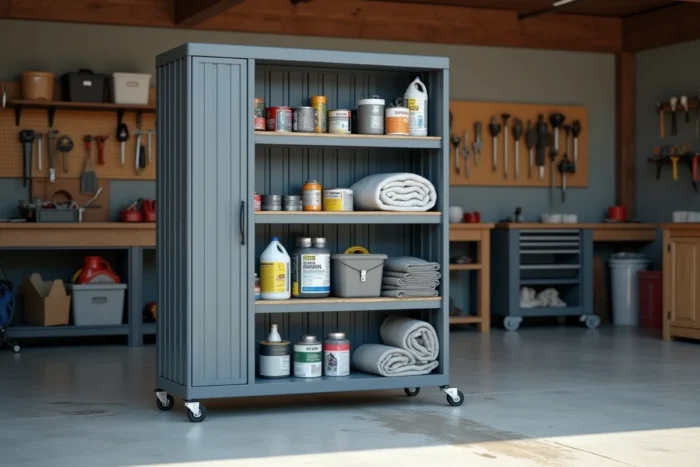
Load capacity and shelves: the real limits of a plastic cabinet
A point rarely detailed in commercial descriptions concerns the maximum load per shelf. On a metal cabinet, each shelf often supports several dozen kilograms. On a plastic model, this capacity varies greatly depending on the thickness of the shelf and the fastening system.
Three elements deserve verification before purchase:
- The thickness of each shelf and its reinforcement method (ribs under the surface, honeycomb structure, or solid). A thin shelf without ribs quickly bends under concentrated weight in the center.
- The clipping or nesting system of the shelves into the uprights. A plastic clip assembly holds less securely than an integrated metal rail, common on mid-range models.
- The overall stability of the furniture once loaded. Tall and narrow cabinets, popular for garages, tend to tip over if the load is concentrated at the top. A wall anchoring, even if rudimentary, changes the game.
The available data does not allow for precise comparisons of load capacities between different references sold at Brico Dépôt. The only reliable method remains to consult the technical notice provided with the product and not to exceed the indicated limit, even if the furniture seems solid when empty.
Plastic cabinet for garage, laundry room, or bedroom: very different constraints
A common mistake is to buy a single type of plastic cabinet for all household uses. The conditions of a garage are nothing like those of a child’s bedroom.
Garage and covered outdoor
Humidity, temperature variations, and dust require a model with closed doors and seals. Plastic makes much more sense here compared to particle board, which swells with moisture. However, direct exposure to sunlight degrades certain polypropylenes that do not contain UV treatment. A model intended for the garage does not need to be aesthetic, but it must withstand impacts (tools, bikes bumping).
Laundry room and pantry
Space is often limited. The depth of the furniture is as important as its height. A cabinet less than 40 cm deep is sufficient for storing household products, but it will not be suitable for buckets or bulky appliances. Plastic resists laundry splashes well, which is a concrete advantage over melamine.
Interior and bedroom
In a living space, the visual aspect of plastic often poses a problem. Finishes that mimic wood or woven rattan exist, but they remain identifiable as plastic from a short distance. For a temporary dressing or toy storage, this is an acceptable compromise. For furniture visible daily in a living room, field reports suggest prioritizing other materials.

Regulatory pressure on plastic: what changes for the consumer
French and European regulatory developments on plastics now affect domestic furniture. The underlying trend pushes manufacturers and distributors towards greater transparency regarding the composition and end-of-life of products.
Concretely, this means that recyclability becomes a relevant purchasing criterion, even for a low-cost cabinet. A mono-material polypropylene piece is easier to recycle than a composite mixing plastic and metal. The collection channels for used furniture (eco-organisms) accept these products, but effective recovery depends on the purity of the material.
For buyers wishing to limit their impact, checking whether the manufacturer communicates the percentage of recycled material integrated into the product remains the most direct action. The available data do not allow for identifying which specific references at Brico Dépôt use recycled plastic, but the market trend is clearly moving in this direction.
Concrete selection criteria for a plastic cabinet in a DIY superstore
Before heading to the checkout, a few quick checks can avoid unpleasant surprises:
- Check the load per shelf in the notice, not on the marketing packaging which often indicates the total load of the furniture.
- Test the door closing system in-store. A fragile latch breaks after a few months of intensive use in a garage.
- Measure the available space including the door opening. A cabinet with hinged doors requires clearance that sliding doors do not.
- Prefer a model with adjustable feet if the garage or pantry floor is not perfectly level.
The price remains the main argument for plastic cabinets against metal or wood alternatives. This accessibility has a downside: the lifespan is generally shorter, especially in cases of UV exposure or repeated heavy loads. A well-chosen model for the right use lasts several years without issue. A poorly suited model shows its limits within a few months.