
Between industrial food, chemical antiparasitics, and various dietary supplements, measuring what truly benefits a dog or cat requires comparing approaches. The challenge is not to choose a side (natural versus conventional), but to identify practices whose benefits are documented and those that present underestimated risks.
Integrative Veterinary Medicine: What the Term Really Covers
Integrative medicine applied to companion animals combines conventional treatments (vaccination, antiparasitics, surgery) with complementary practices such as acupuncture, herbal medicine, or functional rehabilitation. Several French-speaking and North American veterinary clinics have structured their care around this approach since 2023.
This model is progressing mainly for three profiles: older dogs suffering from joint pain, animals with anxiety disorders, and chronic dermatological conditions. The consultation no longer aims at the one-time treatment of a symptom but at the development of a comprehensive wellness plan.
Specifically, an integrative veterinarian may combine a conventional anti-inflammatory with acupuncture sessions for an arthritic dog or suggest managing environmental stress alongside dermatological treatment. Regular follow-up remains the foundation of this approach, as information sheets and practical guides are available on https://www.animaleo.net/ to assist owners between consultations.
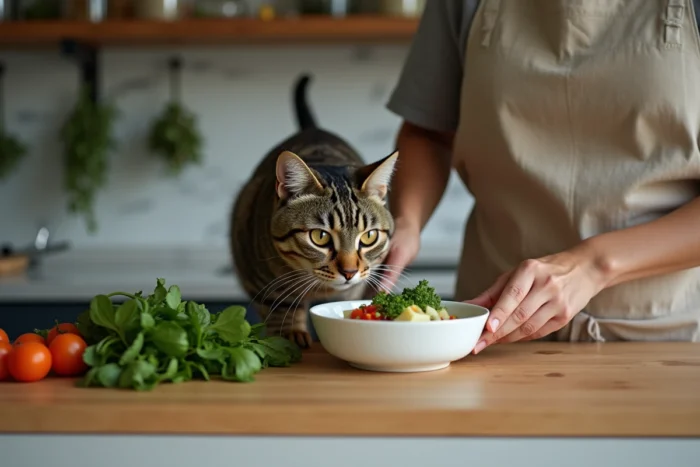
Natural Care for Dogs and Cats: Benefits and Precautions Comparison
Not all practices labeled “natural” are equal. The table below compares the main complementary approaches used for animal health, distinguishing documented uses from identified risks.
| Approach | Common Uses | Documented Precautions |
|---|---|---|
| Herbal Medicine | Digestive support, anti-stress (valerian, chamomile) | Some plants are toxic to cats (garlic, onion, St. John’s Wort). Dosage based on weight is mandatory |
| Essential Oils | External antiparasitic, calming | Systematic dilution, test on a small area, immediate cessation in case of redness or behavioral change |
| Veterinary CBD | Pain management, anxiety | Products specifically formulated for animals, dosing protocols based on weight, veterinary supervision recommended |
| Acupuncture | Joint pain, post-surgical rehabilitation | Practiced only by a trained veterinarian, no self-medication possible |
| Homemade Diet | Control of ingredients, adaptation to allergies | Risk of deficiencies if the ration is not calculated by a professional |
The common point of these approaches: none replace a veterinary diagnosis. They function as complements to medical follow-up, not as substitutes.
Essential Oils and Animals: A Special Case
Recent recommendations emphasize systematic dilution and limited application duration for any use of essential oil on a dog. The obligation to stop immediately in case of increased itching or behavioral change is not just a precautionary advice, it is a basic rule.
Cats metabolize certain aromatic compounds very poorly. Several oils commonly used in humans (tea tree, eucalyptus) can cause severe poisoning in cats, even in atmospheric diffusion.
Natural Diet for Dogs and Cats: What Homemade Rations Require
Preparing their pet’s food themselves is increasingly appealing to owners. The idea of controlling each ingredient seems reassuring. However, a poorly balanced homemade ration can lead to deficiencies within weeks.
A homemade meal for dogs must cover needs for proteins, fats, carbohydrates, minerals, and vitamins in proportions that vary according to breed, age, and activity level. Without precise calculation, the most common deficiencies concern calcium, zinc, and certain B vitamins.
- Have the ration validated by a veterinary nutritionist before starting, not after symptoms appear
- Do not extrapolate a dog’s needs from human food (the protein/carbohydrate proportions differ significantly)
- Monitor weight and coat condition every two weeks during the dietary transition phase
- Introduce a species-appropriate mineral and vitamin supplement if the ration does not contain offal
A well-managed homemade diet can improve coat quality, digestion, and appetite. Poorly managed, it can have the opposite effect within months.

Natural Antiparasitic Prevention: Limits and Effective Combinations
Chemical antiparasitics (spot-ons, tablets) remain the reference in terms of proven effectiveness against fleas, ticks, and worms. Natural alternatives (diatomaceous earth, apple cider vinegar, certain essential oils) offer a complement, rarely a complete replacement.
The difference lies in reliability: a veterinary antiparasitic product has a documented duration of action and a precise spectrum of action. A homemade spray based on apple cider vinegar may have a temporary repellent effect, but its duration of action and effectiveness vary according to the environment.
The most coherent combination is to maintain the conventional antiparasitic treatment prescribed by the veterinarian while using natural methods for environmental maintenance (washing bedding, regular vacuuming, cleaning resting areas).
Stress Management as a Lever for Overall Health
A stressed animal is more likely to develop skin, digestive, and immune disorders. Environmental enrichment (rotating toys, high spaces for cats, varied walks for dogs) directly affects cortisol levels.
Stress signals often go unnoticed: a dog licking its lips outside of mealtime, a cat sleeping more than usual or avoiding contact. These behavioral changes often precede the appearance of physical symptoms.
The takeaway from the integrative approach is simple: prevention costs less and protects better than cure. A wellness plan combining appropriate diet, reasoned antiparasitic prevention, and attention to behavioral signals covers the majority of a dog or cat’s needs. The veterinarian remains the primary contact to arbitrate between natural approaches and conventional treatments according to each situation.