
Your Silvercrest mini air cooler comes out of the box, and the filter is packaged separately in a plastic bag. Before even filling the water tank, this filter must be properly installed for the device to produce anything other than a simple stream of lukewarm air. The principle is simple: the drawn-in air passes through a wet filter, and it is this evaporation that lowers the temperature of the airflow. Without a filter in place, or with a poorly positioned filter, the cooler operates like a basic fan.
Filter and tank of the Silvercrest: two distinct maintenance tasks not to be confused
Many guides mix up the maintenance of the filter with that of the water tank. However, the two components have different roles and cleaning frequencies that do not overlap.
The filter is the porous piece (often made of honeycomb material or non-woven fabric) that absorbs water and brings it into contact with the airflow. The tank, on the other hand, stores the cold water that feeds the filter by capillarity or gravity. A clogged filter reduces the flow of fresh air even if the tank is full. Conversely, a dirty tank can generate unpleasant odors without the filter being the cause.
A comprehensive guide on the installation and filter of the Silvercrest mini air cooler details each step of the initial assembly, including the correct positioning in the housing.
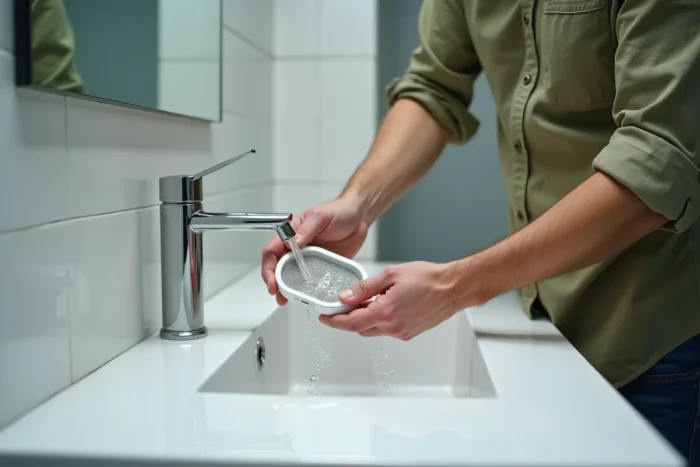
In practice, always separate the two operations in your routine. Empty and dry the tank after each prolonged use session. The filter should be rinsed with clear water and allowed to air dry before being replaced. Mixing these actions is like cleaning an aquarium without distinguishing the filter from the tank.
Installing the Silvercrest filter: the right method from the first use
The manufacturer’s diagram for the SilverCrest model (reference STLH 8 B2, available in PDF on the Lidl-service website) shows access to the filter from the back or the top depending on the version. Always refer to the manual provided with your device, as generic advice on air coolers may not correspond to the architecture of this compact model.
Steps for installing the filter
- Remove the filter from its plastic packaging and rinse it under cold water for a few seconds to evenly moisten it before the first insertion.
- Open the filter compartment (rear panel or top hatch depending on the model) and slide the filter into the designated guide rails, ensuring it lies flat without folds or bulges.
- Close the compartment until it clicks. If the panel does not close easily, the filter is sticking out of its housing: remove it and reposition it.
- Fill the tank with fresh water (no ice beyond the maximum fill line) and plug in the USB cable.
Did you notice that the connection is USB? This is a feature of the Silvercrest mini cooler that makes it usable with a power bank, a laptop, or a standard wall adapter. The power remains modest, suitable for a desk or bedside table, not for an entire living room.
Signs of filter wear: when rinsing is no longer enough
After several weeks of regular use, the filter gradually loses its absorption capacity. A saturated filter is recognized by its smell before it is visible to the eye. If a slight musty odor persists after careful rinsing and complete drying, the filter must be replaced.
Another sign: the airflow from the device feels as lukewarm as that of a standard fan, even with a tank full of cold water. The filter no longer retains enough moisture to cause the evaporation that generates coolness.
The manufacturer’s manual does not always specify a lifespan in weeks or months, as it depends on the quality of the water used and the frequency of use. Hard water and daily use accelerate filter clogging. If your tap water is hard, rinsing every two to three days significantly extends the filter’s lifespan.
Preventing bad odors: complete drying, the most underestimated action
The majority of complaints about air coolers concern odors. The culprit is almost never the new filter, but stagnant water in the tank combined with a filter that has remained damp between uses.
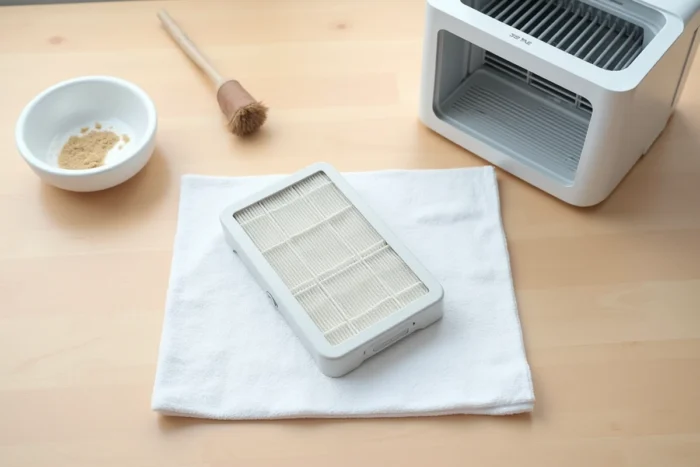
Why does this detail change everything? Because bacteria thrive in a warm, humid environment. Removing the filter and allowing it to air dry after each use breaks this cycle. The same logic applies to the tank: empty it, wipe it down, leave the lid open.
Here are the most effective preventive measures:
- Never leave water in the tank if the device remains off for more than a few hours.
- Store the dry filter in a ventilated area, especially at the end of the summer season.
- Do not add any additives (essential oils, fragrances, vinegar) to the tank: these products degrade the filter’s structure and can clog the pores.
Tap water or filtered water for the tank
Tap water is suitable in most cases. If your area has very hard water, filtered water from a pitcher limits white deposits on the filter. Demineralized water is not necessary for this type of compact device: it is reserved for ultrasonic humidifiers whose technology differs.
The Silvercrest mini cooler remains a supplementary device designed for localized comfort, on a desk, bedside table, or countertop. Its filter is the key component of its effectiveness. Regular maintenance, even if quick, makes the difference between a pleasantly cool breeze and a damp airflow that refreshes no one.