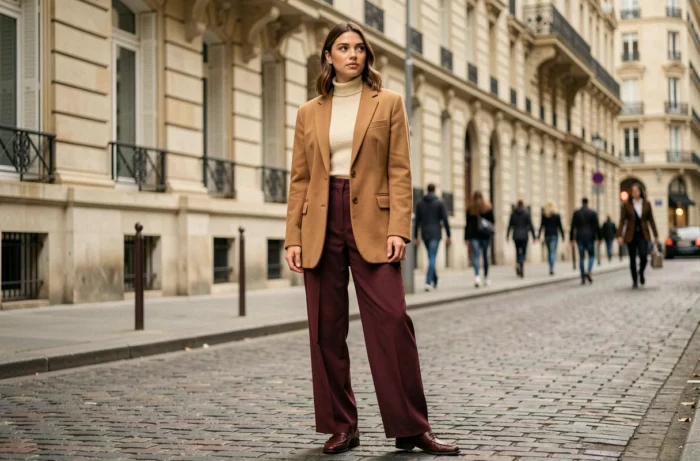
This season’s fashion trends are defined less by a viral print or a standout color than by a shift in regulatory and industrial frameworks. Since September 1, 2026, the French anti-ultra fast-fashion law applies an environmental unit penalty on each item sold by disposable fashion players, pushing brands to offer more sustainable and modular clothing.
This constraint reshapes the collections available in stores and online, steering trends towards longer-lasting pieces.
Environmental Penalty and the End of Disposable Micro-Trends
The penalty outlined by the French law applies per item, with an amount that can reach several euros per piece starting this year and will gradually increase until 2030. It is capped at half the selling price excluding taxes. For brands, the calculation is simple: multiplying ephemeral references now costs more than designing fewer, better-thought-out models.
The concrete result on the shelves: collections are narrowing around versatile pieces. A well-cut jean, a structured jacket, a dress that transitions from office to weekend. The micro-trends that disappeared after three weeks are losing their profitability. Brands that relied on volume and rapid turnover must rethink their model.
This shift does not only concern the giants of fast fashion. Mid-range brands are also adjusting their ranges by reducing the number of seasonal references to focus on pieces whose stylistic lifespan exceeds a single season. The autumn-winter 2026 fashion trends directly reflect this logic, with more robust materials and cuts designed to last several years without appearing dated.
To keep up with these developments and spot pieces that align with this new reality, Buzzarium’s fashion page regularly curates selections focused on sustainable style.
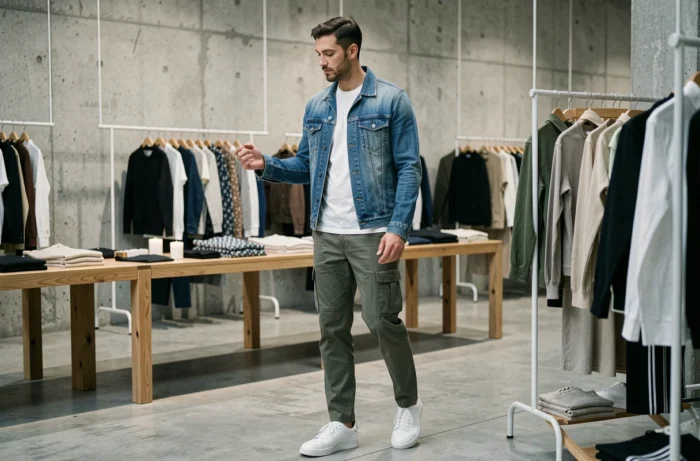
Re-made Capsules and Collections from Unsold Items: A Unique Style by Design
The European Ecodesign Regulation (ESPR) has prohibited large textile companies from destroying their unsold clothing, accessories, and shoes since July 2026. Brands must now resell, repair, redesign, or donate these stocks, and publish the volumes concerned each year.
This obligation has given rise to a new type of collection: re-made capsules. The principle is to recover unsold items, rework them (dyeing, cutting, hybrid assembly), and resell them as limited series. Each piece differs slightly from the next, ensuring a truly unique style.
Creative clearance corners are also multiplying, both in stores and online. The difference with old clearance sales: the pieces are altered or reassembled, not just sold off at a loss. A coat whose lining has been replaced with a contrasting fabric, a shirt whose collar comes from another model. These details create garments that are impossible to find in identical form.
- Re-made capsules offer unique pieces from reworked old stocks, often in series of a few dozen copies
- In-store reconditioning corners allow customers to try on and check finishes before purchase, reducing returns
- Brands that publish their unsold volumes provide useful transparency for choosing retailers aligned with a sustainable approach
Sustainable Materials and Seasonal Colors: What Shapes Autumn-Winter Looks
The trio of materials dominating the autumn-winter 2026 collections is denim, smooth leather, and suede. These three textiles share a common point: their resistance to wear, making them compatible with the logic of durable pieces imposed by the regulatory context.
This season, denim is worn in structured cuts. The barrel jean, with its wide leg and slightly rounded effect, remains a key cut. It works well with both sneakers and ankle boots with intricate details. Smooth leather returns on short jackets and midi skirts, in dark shades. Suede, on the other hand, adds a softer texture to jackets and accessories.
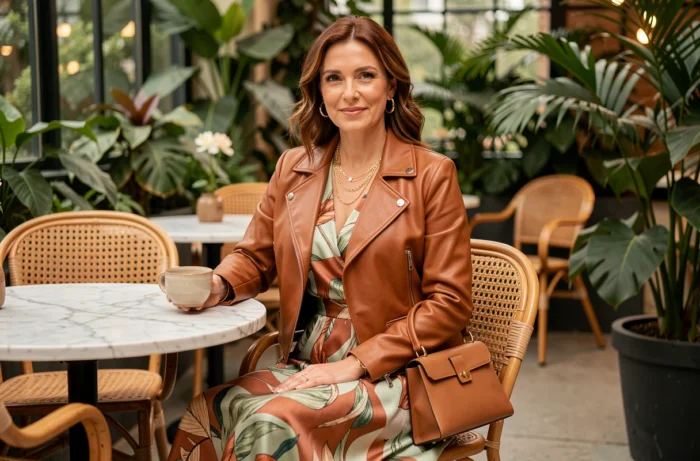
In terms of palette, the season’s colors are organized around sober and natural tones: khaki, olive green, brown, deep black. A few brighter touches (deep burgundy, petrol blue) punctuate the silhouettes without overwhelming them. Neutral colors dominate the main pieces, while color accents focus on accessories.
Prints to Watch This Season
Animal prints remain present but are worn differently. Leopard or snake patterns appear on structured pieces (blazers, pencil skirts) rather than on flowing dresses. This contrast between the wild pattern and the strict cut results in a more controlled outcome.
Checks are also stepping out of their classic register. They can be found on wide trousers and oversized coats, in color combinations less expected than the traditional gray Prince of Wales. Tweed, whose popularity has significantly increased according to data from the Tagwalk platform, confirms this trend towards visible textures and apparent weaves.
Building a Trendy Look with Fewer Pieces
The reduction in the number of references in stores has an unexpectedly positive effect: it simplifies choices. Instead of navigating among hundreds of nearly identical models, the seasonal wardrobe is built around a few strong pieces.
- A military or aviator-inspired jacket, in khaki or olive green, that structures the silhouette and works with both jeans and dresses
- A barrel jean or straight-cut raw denim trousers, worn with detailed shoes (buckles, visible stitching, contrasting soles)
- A re-made piece or a limited series item, which brings uniqueness to the look without effort in coordination
- Accessories in suede or smooth leather in natural tones, which unify the whole
Three to four well-chosen pieces are enough to create several distinct looks. Unique style does not come from accumulation but from the quality of combinations. A premium military jacket worn open over a flowing winter floral print dress creates a contrast of styles that draws attention without overwhelming.
Extra-long sleeves, another strong signal noted by Tagwalk this season, add a detail of proportion that changes the reading of a silhouette. This type of finish costs nothing extra at purchase but transforms a basic piece into a standout item.
The underlying trend of this season is not limited to a list of items to buy. The French and European regulatory framework has changed what brands can produce and sell. The available collections are more focused, the materials more robust, and the pieces designed to last. Adopting a unique style this season means taking advantage of this constraint: fewer superfluous choices, more pieces with strong personality.