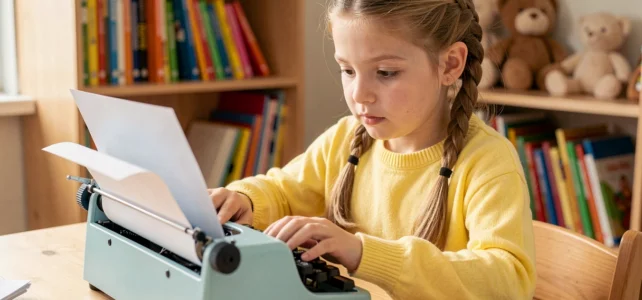
Among restored vintage models, plastic toys, and second-hand portable machines, choosing a typewriter for children depends on criteria that most buying guides do not compare. Weight, regulatory compliance, compatibility of consumables, mechanical resistance: each parameter eliminates or validates a type of machine. This article measures the concrete differences between product categories to identify the most costly mistakes.
CE Compliance and Toy Regulations: A Criterion Ignored in Most Comparisons
A typewriter sold in the toy aisle, with colorful packaging and a promise of creative writing for those under 14, legally falls into the category of toys under European regulations. The Regulation (EU) 2025/2509 on Toy Safety, adopted in 2025, will replace Directive 2009/48/EC starting August 1, 2030.
This text mandates that any product designed for play by a child under 14 must be tested, labeled, and documented according to EN 71 standards. Three aspects are directly concerned: EN 71-1 for mechanical and physical safety, EN 71-2 for flammability, EN 71-3 for the migration of chemical elements.
The determining criterion is not the product’s technology, but what a parent can reasonably understand as a play use. A colorful machine sold for writing stories falls within this scope. Buying a model without CE marking and without a toy compliance declaration constitutes a safety and compliance error that guides focused on aesthetics or brand do not highlight.
Before any purchase, checking for the presence of the CE marking on the product and not just on the packaging remains the first reflex. A vintage model restored by a craftsman, charming as it may be, does not have CE toy marking, which limits its use to a decorative or supervised gift, not as an independent toy.
Comparison Table of Children’s Typewriter Categories
The available machines are divided into three main categories. Their characteristics diverge on points that directly affect a child’s experience. Knowing the mistakes to avoid before purchasing allows for a quick elimination of unsuitable options.
| Criterion | Restored Vintage Machine | New Toy (Plastic) | Second-Hand Portable (1960s-80s) |
|---|---|---|---|
| Average Weight | High (several kilos) | Light | Moderate |
| CE Toy Marking | Absent | Present (if compliant) | Absent |
| Mechanical Resistance | Very high (steel) | Low to moderate | High |
| Availability of Ribbons | Variable by model | Proprietary or standard | Standard (common universal ribbon) |
| Keyboard Feel | Firm, requires strength | Soft, little resistance | Intermediate |
| Indicative Budget | Highest | Most accessible | Intermediate |
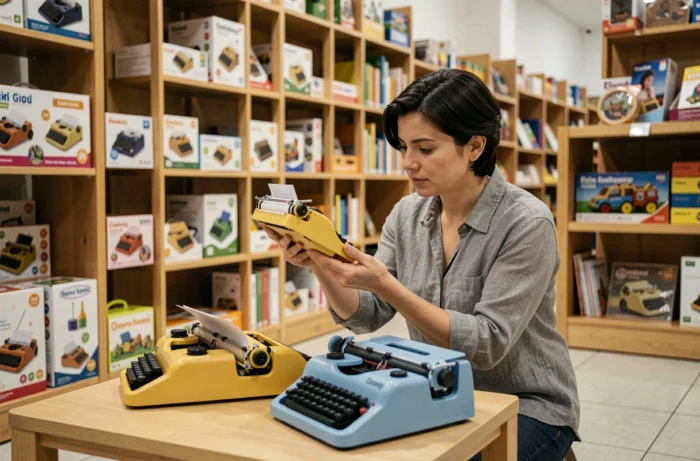
This table highlights a paradox: the most robust category is also the one that poses the most compliance and ergonomics problems for a child. Conversely, new CE-marked toys offer regulatory safety but often sacrifice durability.
Weight and Key Press Force: The Two Filters Children Impose
A ten-year-old child does not have the key press strength of an adult. On a vintage steel machine, the keys require significant pressure to properly imprint the character on the paper. After a few minutes, finger fatigue discourages most young users.
Portable models from the 60s to 80s (Olivetti Lettera, Hermes Baby, Brother) offer a lighter touch than office machines, which explains their popularity in recommendations. However, their weight remains higher than that of a toy, complicating transport by the child.
- Check that the child can press each key down fully without excessive effort, by testing the machine before purchase or consulting detailed reviews on the specific model
- Prefer a model whose weight allows the child to move it alone on a table, without adult assistance
- Avoid full-size office machines (Olympia SG, Royal KMM), designed for fixed positions and adult hands
A keyboard that is too hard turns initial enthusiasm into quick abandonment. This criterion alone eliminates the majority of vintage office machines, even those carefully restored.
Ribbons and Consumables: The Trap of the Unavailable Model
The most common mistake after purchase concerns ink ribbons. A model whose ribbons are no longer manufactured becomes unusable within weeks. Popular portable machines (Olivetti Lettera range, Hermes Baby) use universal ribbons that are still produced, ensuring a sustainable supply.
For new toys, the problem sometimes reverses: some manufacturers impose a proprietary consumable sold only on their online store. If the brand ceases operations, the proprietary ribbon becomes unavailable and the machine useless.
- Before purchase, search for the exact reference of the compatible ribbon and check its availability from multiple suppliers
- Prefer models that accept a standard universal ribbon, available at haberdasheries or online
- Avoid machines whose ribbon mechanism requires a specific non-standard cartridge
Mechanical Reliability and Value for Money: What the Budget Doesn’t Say
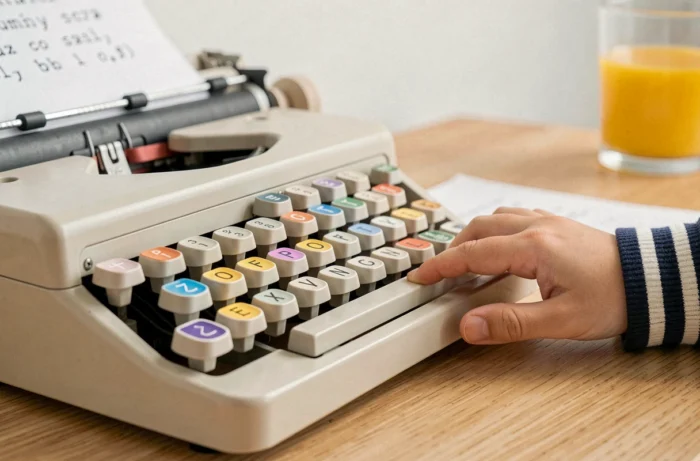
A low price does not indicate a bad machine, and a high price does not guarantee reliability. Restored vintage machines reach the highest budgets on the market, but their condition entirely depends on the quality of the restoration. A defective character alignment, a skipping carriage, or a tired return spring can go unnoticed in an online sales photo.
Conversely, a new low-cost toy can provide a sufficient experience for a first contact with mechanical typing, provided that CE compliance is verified and that the construction does not rely on overly fragile parts.
The optimal value for money often lies in well-inspected second-hand portables, which combine robustness, suitable touch, and available ribbons. Purchasing from a specialized dealer offering a functioning guarantee remains the best protection against unpleasant surprises.
The most reliable filter for a successful purchase does not depend on the charm of the model or the brand, but on three concrete checks: CE marking if the product targets a child under 14, key press force tested by the child, and confirmed availability of the ink ribbon. These three points, verified before payment, eliminate the vast majority of disappointments.