
The ayahuasca consumed in a ceremonial context mobilizes two distinct pharmacological components: the vine Banisteriopsis caapi, rich in MAO-inhibiting beta-carbolines, and the leaves of Psychotria viridis or Diplopterys cabrerana, a source of DMT (dimethyltryptamine). Without the enzymatic inhibition produced by the vine, DMT would be degraded in the digestive tract before reaching the central nervous system.
This pharmacological synergy explains why the brew is not merely a psychedelic, and why the quality of the preparation conditions both the intensity of the visions and the profile of somatic effects.
Pharmacology of the ayahuasca ceremony: what happens in the body
The onset phase generally occurs within fifteen to forty-five minutes following ingestion. The beta-carbolines (harmine, harmaline, tetrahydroharmine) block monoamine oxidase type A, allowing DMT to reach the 5-HT2A serotonin receptors. This mechanism produces a spectrum of effects ranging from kaleidoscopic visions to deep introspection, often accompanied by nausea and purging.
We observe that purging (vomiting, diarrhea) is a central element of the experience, not a side effect to be minimized. In shamanic tradition, it is interpreted as a cleansing process. Physiologically, the inhibition of MAO causes vagal stimulation that triggers these gastrointestinal reactions.
The risk profile largely depends on drug interactions. SSRIs or MAOIs are strictly incompatible with ayahuasca: the risk of serotonin syndrome, potentially fatal, necessitates a supervised withdrawal of several weeks before any ceremony. Individuals on lithium or tramadol are also affected.
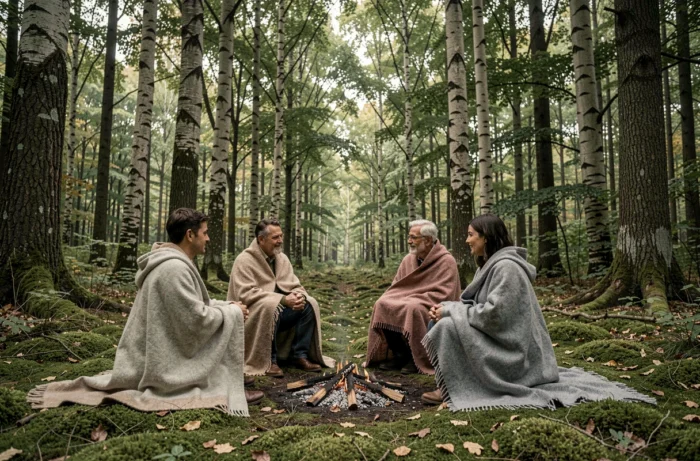
Ayahuasca retreat in France: legal framework and ground reality
DMT is listed as a narcotic in France. Any possession, transport, or administration exposes one to criminal prosecution. This classification also covers plant preparations containing DMT, which places ayahuasca in an operational gray area: the vine Banisteriopsis caapi alone is not classified, but the combination with a source of DMT is.
Despite this framework, ceremonies are held on French territory. They operate in a gray area, often under the guise of spiritual practices or personal development. Participating in an ayahuasca retreat in France involves understanding this regulatory context before taking any steps.
International booking platforms now list retreats on French territory, indicating a structured commercial offer. We recommend systematically checking the facilitator’s qualifications, the existence of a prior medical protocol (health questionnaire, list of contraindications), and the presence of a sober companion throughout the ceremony.
Post-ceremony integration: the phase that travel accounts overlook
Integration is the true therapeutic work, not the ceremony itself. The most recent content on the subject converges on a finding: the effects of ayahuasca continue to evolve for weeks, sometimes months after ingestion. Reducing the experience to the night of the ceremony is akin to judging a treatment based on its first dose.
Integration relies on several concrete pillars:
- Keeping a journal in the days following, to capture impressions, visions, and emotions before they dissipate or distort in memory.
- A voluntary slowing down of the pace of life: no immediate return to work, limiting sensory stimulation, light diet.
- Specialized psychological support, distinct from the ceremony facilitator, to address the psychic content that emerges.
This last point remains the most neglected. Online testimonies frequently describe a phase of confusion, derealization, or emotional lability in the weeks following the ceremony. Psychic distress, insomnia, intrusive thoughts are warning signals that require professional support, not a rushed second ceremony.

Long-term effects and testimonies: what feedback says over several years
Feedback published by participants several months or years after their experience paints a nuanced picture. Some report lasting changes in their relationship with fear, self-awareness, and interpersonal relationships. Others describe persistent anhedonia or difficulty reintegrating into their daily lives.
A report published one year after a retreat indicates profound transformations but also prolonged destabilization phases. The notion of “instant healing” promoted by some commercial operators does not withstand scrutiny from longitudinal testimonies. Ayahuasca opens a process, it does not conclude it.
We observe that participants who benefited from a structured integration framework (therapeutic follow-up, talking circle, contemplative practices) report more stable results than those left without support. The choice of a retreat should not be limited to the quality of the shaman or the brew but should include an evaluation of the post-ceremony framework.
Criteria for selecting a serious ayahuasca retreat
Not all retreats are equal, and the rise of commercial offerings makes sorting through them all the more necessary. Here are the markers of seriousness that we consider non-negotiable:
- A detailed health questionnaire sent before registration, including ongoing treatments, psychiatric history, and cardiovascular contraindications.
- The presence of at least one companion trained in psychological first aid during the ceremony.
- An integration protocol offered after the retreat, with at least one follow-up interview within two weeks.
- Transparency regarding the composition of the brew and the origin of the plants used.
The absence of a prior medical questionnaire is a major warning signal. Any operator who welcomes participants without assessing their health status poses a risk whose consequences can be serious, including from a medico-legal standpoint in the French context.
Ultimately, the choice of an ayahuasca retreat rests less on the promise of a transcendent experience than on the rigor of the framework proposed before, during, and after the ceremony. Spectacular visions and accounts of radical transformation abound online. What is lacking, however, is information on what happens when the mind takes weeks to regain its balance.